Domenico Scarlatti was a man ahead of his time. He composed music that helped usher in the Classical period and revolutionize keyboard technique. But despite this, we know very little about the man himself. He led a quiet life as the musical director of the Portuguese royal court and as the music teacher of the Portuguese princess and later queen of Spain, Maria Bárbara de Bragança. His inventiveness and virtuosity at the harpshicord was unrivaled! A famous story about Scarlatti, told by Thomas Roseingrave to music historian Dr. Charles Burney, goes:
“… a grave young man dressed in black and in a black wig, who had stood in one corner of the room very quietly and attentive while Roseingrave played, being asked to sit down to the harpsichord, where he began to play, Rosy said he thought ten thousand devils had been at the instrument; he never heard such passages of execution and effect before. The performance so far surpassed his own, and every degree of perfection to which he thought it possible he should ever arrive, that, if he had been in sight of any instrument with which to have done the deed, he should have cut off his own fingers…”
During our lesson time we will be talking a little bit about Scarlatti. Our homework will be to color the Scarlatti coloring page while enjoying some of his music (some suggestions and a link to a short biography are given below). After listening to his music fill in the three blank lines on the coloring page with answers to the prompt: “Scarlatti’s music makes me think of…”
SUGGESTED VIDEOS FOR LISTENING HOMEWORK
Sonata in D minor, K. 141 – Considered one of Scarlatti’s finest sonatas, it is said that Scarlatti was trying to imitate the sound of the mandolin by using fast repeated notes to achieve a tremolo-like effect. There are also plenty of demanding acrobatics throughout the piece (like hand-crossings and leaps across the keyboard) that Scarlatti invented. This piece is performed by one of the greatest living pianists, Martha Argerich.
Sonata in E major, K. 380 – This sonata is one of Scarlatti’s most popular compositions and is believed to have been composed around 1753, 4 years before his death.
Sonata in B-flat major, K. 545 –
Sonata in D minor, K. 517 – Here we have Scarlatti’s Sonata K. 517 performed by famed American harpischordist Elaine Comparone on a 2 manual harpsichord.
Fugue in G minor, K. 30 (Fuga del gatto, translated as The Cat Fugue) – The legend goes that Scarlatti came up with the motif for this fugue by hearing his cat Pulcinella walk across the keys of the harpsichord (the cat, being constantly curious about the sounds coming from the instrument, was prone to walking on it).
Musical Duel with George Frideric Handel in Rome in 1709 – This video depicts a famous story about Scarlatti and Handel. The two were asked to engage in a friendly musical competition at the harpsichord and organ. The clip is from the movie “God rot Tunbridge Wells!” and shows the 23 year-old Handel (in the brown suit) competing against his friend Domenico Scarlatti (gray suit). Handel presents Scarlatti with a a piece of music and Scarlatti imitates and improvises on it. Scarlatti is said to have won the harpsichord competition (according to Scarlatti scholar Ralph Kirkpatrick and despite what Handel says in the clip) but later lost to Handel at the organ. Handel’s first biographer wrote: “Handel often used to speak of Domenico with great satisfaction and indicated there was great reason for it, for besides his great talents as an artist he had the sweetest temper and the genteelest behavior. On the other hand, it was mentioned that Scarlatti, as oft he was admired for his great executions, would mention Handel and cross himself in admiration.”
During our lesson time we will also be talking about another prominent Italian employed by the Spanish king, the great castrato singer Farinelli. He and Scarlatti became friends during their time working for King Philip V of Spain and his son, King Ferdinand VI. No one in our world today can sing like Farinelli, since the process of becoming a castrato fell out of fashion in the late 19th century. The videos below are what we imagine Farinelli might have sounded like. The first is a recording of the last castrato singer, Alessandro Moreschi.
The second video is of Philippe Jaroussky, a countertenor. Countertenors nowadays train their voices to sing primarily in falsetto, which is different from how castrati used to sing. A revival of Baroque opera in the 20th century has generated a need for countertenors to take over the roles of the castrati. Here Philippe Jaroussky sings “Lasica ch’io pianga” by George Frideric Handel.
Biography of domenico scarlatti
For a biography of Domenico Scarlatti check out Encyclopedia Britannica’s entry Domenico Scarlatti
children’s books:
“Scarlatti’s Cat” by Nathaniel Lachenmeyer, ISBN-10: 0761354727
Edvard Grieg is Norway’s greatest composer and his music is a national treasure. For most of his life, he saw his country under the power of other nations and struggling to be free. His music gave Norway its own voice and celebrated its many wonders… He created musical pictures of Norway’s breathtaking landscapes, from the fjords to the countryside; he made the folk tales of trolls and dwarfs come alive; he created richly lyrical music from the folk songs he heard the peasants sing. His music is original, unique, and turned the eyes of the music world north towards the land of the midnight sun. Grieg’s music is some of the most recognizable and loved of all classical music!
During our lesson time we will be talking a little bit about Grieg. Our homework will be to color the Grieg coloring page while enjoying some of his music (some suggestions and a link to a short biography are given below). After listening to his music fill in the three blank lines on the coloring page with answers to the prompt: “Grieg’s music makes me think of…”
SUGGESTED VIDEOS FOR LISTENING HOMEWORK
“In the Hall of the Mountain King” from Peer Gynt Suite no. 1 – Probably Grieg’s most famous and recognizable piece! It has been used in numerous movies, tv shows, video games, and cartoons and by popular musicians. It was originally composed as incidental music for Act II of “Peer Gynt”, a play written by Henrik Ibsen. At this point in the play, Peer is in a dream-like state after hitting his head on a rock. He arrives at Dovregubben’s hall. The troll king offers Peer the hand of his daughter in marriage. She is lovely, but in order to marry her, Peer must become a troll… he would have to grow a tail, never again see the light of day, and slit his eyes to see the world as a troll does. Peer does not like what he hears and later that evening tries to escape. The music starts off quietly as Peer slips out of his bedroom and tip-toes his way through the mountain. Unfortunately he runs into guards and the music speeds up as the trolls chase Peer through the mountain. Just as he is being surrounded by the trolls, church bells chime and the trolls melt away. Peer is safe! The music ends with a loud crash before the church bells chime.
Piano Concerto in A Minor, Op. 16 – This is the only piano concerto that Grieg completed and it is one of the most popular and widely performed of all piano concerti. Grieg composed this piece in a whirlwind of inspiration surrounding his marriage to Nina Hagerup and the birth of their daughter Alexandra.
Troldtog (The March of the Dwarfs), Op. 54 No. 3 – Grieg composed 66 short pieces for the piano which were compiled into 10 volumes called the Lyric Pieces. They include some of his most well-known pieces, such as “The March of the Dwarfs” (also translated as “The March of the Trolls”), “Wedding Day at Troldhaugen”, “To Spring”, and “Butterfly”, as well as one of Grieg’s personal favorites “Arietta”.
Wedding Day at Troldhaugen, Op. 65 No. 6 – Grieg composed this piece to commemorate his and Nina’s 25th wedding anniversary. Troldhaugen is the name of the home Grieg and his wife built and shared in Bergen, Norway from 1885 until his death in 1907. The name Troldhaugen, meaning “Troll Hill”, was chosen by Grieg after hearing that local children nicknamed the nearby valley “The Valley of the Trolls”. Grieg and his wife were both laid to rest in a mountain tomb close to the house.
Peer Gynt Suites 1 and 2 – Henrik Ibsen, a Norwegian dramatist, approached Grieg to compose the incidental music for his play “Peer Gynt”. The play chronicles the journeys of Peer Gynt, a rather unlikable fellow, from Norway to the north of Africa. Grieg worked on the music from 1874 to 1876. It contains three of Grieg’s most loved pieces: “Morning Mood” (the opening), “Anitra’s Dance”, and “In the Hall of the Mountain King”. Today Grieg’s music is infinitely more famous than the play!
BIOGRAPHY OF Edvard Grieg
For a biography of Edvard Grieg check out Encyclopedia Britannica’s entry Edvard Grieg.
CHILDREN’S BOOKS:
“In the Hall of the Mountain King” by Allison Miller Flannery, ISBN-13: 978-1938633133
“Had Fanny been born a poor man’s daughter, she would have been known throughout the world…” (Critic for the English Athenaeum, 1854)
Fanny Mendelssohn (Bartholdy) Hensel is the elder sister of the great Romantic composer Felix Mendelssohn. She was a child prodigy and received the same musical education as her equally talented brother. However, having been born a woman into a wealthy family in the 19th century, her father made it very clear that music was ‘an ornament’ to help her find a suitable husband and, thus, fulfill her position in society as a wife and mother.
At age 24, she married Prussian court painter Wilhelm Hensel, who encouraged her to continue composing. He recognized that music was as essential to her as air. In their new home they set up studios next door to each other and worked happily day after day side by side. Despite her husband’s (and, later on, mother’s) encouragement, she struggled her entire life with whether or not to publish her music. She longed to please her father and her brother but neither of them approved of Fanny pursuing any sort of career in music (although Felix published several of her pieces under his name and championed other female musicians such as Clara Schumann and Josephine Lang). To this day, most of her over 500 compositions remain only in manuscript form and are hidden away in libraries and private collections.
During our lesson time we will be talking a little bit about Fanny. Our homework will be to color the Fanny coloring page while enjoying some of her music (some suggestions and a link to a short biography are given below). After listening to her music fill in the three blank lines on the coloring page with answers to the prompt: “Hensel’s music makes me think of…”
SUGGESTED VIDEOS FOR LISTENING HOMEWORK
Notturno in G minor – Fanny hosted successful Sunday salon concerts in her home. These concerts were frequented by the greatest composers and performers of the day, including Franz Liszt and Clara Schumann. Shorter pieces, such as this Notturno in G minor, would have been played at these gatherings.
Italien (Schöner und schöner schmückt) – When Felix Mendelssohn was 18 years old he published a collection of 12 chamber songs for voice and piano (Opus 8). Three of the songs (numbers 2, 3, and 12) had actually been composed by Fanny, although she received no recognition in the publication. It was much easier at the time to have her compositions published under her brother’s name. On a visit to Queen Victoria and Prince Albert, Felix found a copy of his Op. 8 songs on the piano in the queen’s sitting room and asked the queen to sing one of the songs. She immediately chose her favorite “Italien”. Felix later wrote to his mother of her singing, “It was really charming and the last long G I have never heard better or purer or more natural from any amateur.” When they had finished he was forced to admit, although with some embarrassment, that Fanny had actually composed it.
Piano Trio in D minor, Op. 11: I. Allegro molto vivace – This is arguably Fanny’s greatest work and some believe it was a response to her brother’s Piano Trio in C minor, Op. 66 which he composed a few months earlier.
Das Jahr – Another one of Fanny’s most important works, “The Year” is a thirteen-piece piano cycle, based on the months of the year plus an epilogue. Fanny composed it as a musical diary chronicling the year she, her husband Wilhelm, and their son Sebastian spent in Italy.
Biography of Fanny mendelssohn hensel
For a biography of Fanny Mendelssohn Hensel check out Encyclopedia Britannica’s entry Fanny Mendelssohn.
Children’s Books:
“Hidden Music: The Life of Fanny Mendelssohn” by Gloria Kamen, ISBN-13: 978-0689317149
“Gifted Sister: The Story of Fanny Mendelssohn” by Sarah Shichtman, ISBN-10: 1599350386
Johannes Brahms was a traditionalist living during the sweeping emotions of the Romantic period. Although he composed his music using the structures and techniques of the classical masters, he added a Romantic flair to them, resulting in bold new harmonies and melodies. His preference for “the old ways” got him into a musical argument with the likes of Lizst and Wagner. Brahms was a bit of a curmudgeon, so he was more that happy to lead the conservative side in the War of the Romantics!
He was meticulous in everything he composed… a perfectionist through and through. In his later years, he burned all of his compositions that he did not feel were good enough to be part of his legacy. He left many compositions unpublished as well.
Despite his reputation for being a grump, he could also be very lovable. He had several very close friends with whom he was very generous with his time and money. He loved nature, animals, and children (his friends’ children loved him dearly and referred to him affectionately as ‘Uncle’). He also loved to eat! He spent a good portion of his professional life in Vienna, and he would have lunch everyday at The Red Hedgehog with a group of friends. A story goes that he visited a doctor who told him that he needed to change his diet. Brahms exclaimed, “But tonight I am dining with Strauss and we are having chicken and paprika!” The doctor said that it was out of the question. Brahms simply replied, “Very well then, please, consider that I did not come to consult you until tomorrow.”
During our lesson time we will be talking a little bit about Brahms. Our homework will be to color the Brahms coloring page while enjoying some of his music (some suggestions and a link to a short biography are given below). After listening to his music fill in the three blank lines on the coloring page with answers to the prompt: “Brahms’ music makes me think of…”
SUGGESTED VIDEOS FOR LISTENING HOMEWORK:
Wiegenlied: Guten Abend, Gute Nacht Op. 49 No. 4 (“Cradle Song” or “Brahms’ Lullaby”) – One of the most famous pieces in the world, it has been sung by generations of parents to lull their little ones to sleep. Brahms dedicated the lullaby to his friend Bertha Faber to celebrate the birth of her second son. The first stanza of the lyrics were taken from a collection of German folk poems and the second stanza was written by Georg Scherer in 1849. It was performed for the first time in Vienna in 1869 by Louise Dustmann (soprano) and Clara Schumann (piano).
Hungarian Dance No. 5 – Brahms’ Hungarian Dances are a set of 21 dances based on Hungarian themes. They were originally composed for piano four hands but were later arranged for other instruments and ensembles due to their immense popularity. The most famous is the 5th dance, which was based on a Hungarian folk dance by Bela Keler. The videos below show two versions of Hungarian Dance no. 5. The first video is the original piano duet and the second is an orchestral arrangement.
Piano Concerto no. 1 in D minor, Op. 15 – This is the first of Brahms’ orchestral pieces to be performed. He completed in 1858 when he was just 25 years old. The first two performances in Hanover and Leipzig were received coldly, but the third performance of the concerto in Hamburg was a great success. After hearing it rehearsed before its premiere, Clara Schumann wrote, “(…) almost all of it sounds beautiful, some parts far most beautiful even than Johannes himself imagined or expected.”
Ballades, Op. 10 No. 1 in D minor – Brahms composed the Opus 10 Ballades at the time he became friends with Robert and Clara Schumann, who were helping Brahms launch his career as a composer. This particular Ballade was inspired by Percy’s version of the Scottish poem “Edward”.
BIOGRAPHY of johannes brahms
For a biography of Johannes Brahms check out Encyclopedia Britannica’s entry Johannes Brahms.
Igor Fyodorovich Stravinsky was the greatest and most influential composer of the 20th century. His exciting and, oftentimes, shocking rhythmic sounds changed classical music forever. He had a unique talent for constantly reinventing himself, which made the music he composed in his 80s as interesting and new as when The Rite of Spring made its first appearance to an unsuspecting musical world in 1913.
During our lesson time we will be talking a little bit about Stravinsky. Our homework will be to color the Stravinsky coloring page while enjoying some of his music (some suggestions and a link to a short biography are given below). After listening to his music fill in the three blank lines on the coloring page with answers to the prompt: “Stravinsky’s music makes me think of…”
SUGGESTED VIDEOS FOR LISTENING HOMEWORK:
The Rite of Spring: Riding on the enormous success of their previous two ballets (Petrushka and The Firebird), Sergei Diaghelev commissioned resident composer Stravinsky to compose music for a new ballet for his Ballets Russes. Stravinsky decided to use an ancient Russian folk tale about the primitive peoples of Russia. The star and coreographer of the ballet company, Vaslav Nijinksy, was on-board to create something completely new and exciting. The result on May 29, 1913 was the most famous classical music scandal ever! Audiences were used to music of the Romantic era, in which, feelings and emotions were central to the musical themes. The pulsating rhythms and dissonant sounds of Stravinsky’s music must have certainly sounded extremely shocking to the audience! One critic commented that, “The music always goes to the note next to the one you expect!” The audience started booing and hissing almost as soon as the ballet began. This soon turned into screaming and shouting which quickly degenerated into fighting throughout the theater. One spectator was said to be punching in rhythm with the music! The noise was so loud that the dancers could not hear the music, so Nijinsky stood on a chair at the edge of the stage (with Stravinsky holding him firmly by his coattails so he would not fall off!) shouting out the numbers for the dancers, who carried on the performance despite the chaos! For more on the debut of The Rite of Spring, check out PBS’s article Stravinsky’s The Rite of Spring.
The Firebird: This ballet is based upon the mythical Firebird, a beautiful creature that glows brightly in red, orange, and yellow. At the beginning of the story Prince Ivan Tsarevich is out hunting and ends up in the magical kingdom of the evil sorcerer, Kashcei. Ivan chases and captures the Firebird. He then releases her when she begs him for her life. Because of his kindness she tells him that she will help him whenever he needs her and gives him a magical feather that he can use to call her. Prince Ivan then encounters 13 princesses who dance around him. He falls in love with one of the princesses and with the help of the Firebird he is able to save her from Kashchei.
Piano Sonata (1924): Stravinsky composed this piano sonata in the summer of 1924 when he was in Biarritz and Nice (France).
Piano-Rag-Music: When Stravinsky moved to France, he “discovered” American jazz music. Jazz was becoming extremely popular all across America and Europe. In this piece, Stravinsky mixes ragtime rhythms and harmonies with Russian elements.
A Conversation with Stravinksy: Up until now, all of our composers lived before any sort of recording device had been invented… But now we can listen to Stravinsky himself talk about his music and how he composed! In the video he tells us that most of his orchestral music was first composed on the piano so he could hear the sounds he heard in his head. Once he was happy with his composition he then orchestrated it.
Stravinsky in Rehearsal Conducting ‘Scherzino’ from Pulcinella: Stravinsky started conducting at the age of 50 because he was in need of money. Although he was never considered a world-class conductor, he had very strong opinions about how his own music should be performed. His instructions were often difficult to understand, but the orchestra musicians were more than happy to do whatever he wanted them to do just because he was Stravinsky! The fact that he recorded so many of his own orchestral works gives today’s music students wonderful material to use in their studies of his music.
BIOGRAPHY of Igor Stravinsky
For a biography of Igor Stravinsky check out Encyclopedia Britannica’s entry Igor Stravinsky.
CHILDREN’S BOOKS:
“Igor Stravinsky” by Mike Venezia, ISBN-10: 0516200542
“When Stravinsky met Nijinsky: Two Artists, Their Ballet, and one Extraordinary Riot” by Lauren Stringer, ISBN-10: 0547907257
“The Tale of the Firebird” by Gennady Spirin, ISBN-10:0399235841
This month we will be talking about Russian composer Pyotr Ilyich Tchaikovsky (often anglicized as Peter Ilyich Tchaikovsky). He is one of the most loved composers of all-time and his music is still widely played the world over. Every year at Christmas time The Nutcracker fills our hearts with Christmas spirit, Swan Lake is a staple in the repertoire of all major ballet companies, Sleeping Beauty was adapted by Disney to bring to life the story of Princess Aurora, and military bands often give spectacular performances of his 1812 Overture. Tchaikovsky’s music is instantly recognizable and cherished over 100 years after his death!
Tchaikovsky was a deeply sensitive person, pouring his feelings into his music (a Romantic composer through and through!). He once said, “Truly there would be reason to go mad were it not for music.” While listening to his music you can often sense the feelings running through his soul… His music can be uplifting and joyful at times and at others, very sad and full of anguish. He spent most of his life fighting between the callings of his heart and the pressures of society.
During our lesson time we will be talking a little bit about Tchaikovsky. Our homework will be to color the Tchaikovsky coloring page while enjoying some of his music (some suggestions and a short biography are given below). After listening to his music fill in the three blank lines on the coloring page with answers to the prompt: “Tchaikovsky’s music makes me think of…”
SUGGESTED VIDEOS FOR LISTENING HOMEWORK:
Swan Lake, Ballet Suite Op. 20, Act II No. 10 – Swan Lake tells the story of Odette, a princess who has been turned into a swan by the evil sorcerer Von Rothbart. She turns back into her human form only at night and can only be freed from the curse if a man, pure of heart, declares his love for her. It was premiered by the Bolshoi Ballet on March 4, 1877 in Moscow and to this day is one of the most popular ballets, being performed by numerous ballet companies around the world every year. In the clip below you can hear the most famous theme from the ballet, in which the oboe’s sorrowful melody is joined by the entire orchestra when Von Rothbart appears in the forest and Odette is transformed back into a swan after meeting Prince Siegfried. This is one of my favorite pieces ever!
Sleeping Beauty Waltz – As you listen you can’t help but imagine Disney’s Princess Aurora dancing and singing “Once Upon a Dream” in the forest with her woodland friends. Disney arranged and adapted Tchaikovsky’s Sleeping Beauty for the 1959 animated movie of the same name.
1812 Overture – Things can get very exciting in classical music, especially when a composer decides to use real cannons in one of his pieces! Tchaikovsky loved to experiment with unexpected combinations of instruments and unusual things to make exciting and interesting sounds in his music. He composed the 1812 Overture to commemorate Russia’s 1812 victory over Napoleon. It is one of the loudest pieces of classical music ever composed!
Dance of the Sugar Plum Fairy – From The Nutcracker, this piece uses an unusual keyboard instrument called a Celeste. Hammers inside the Celeste strike metal plates, like those of a glockenspiel, instead of strings, which give the instrument a heavenly and delicate sound. For more on the Celeste, check out the video further down the post.
A SHORT BIOGRAPHY OF Pyotr Ilyich Tchaikovsky:
Pyotr Ilyich Tchaikovsky was born on May 7, 1840 in the Russian town of Votkinsk. From a young age he showed signs of great musical talent and started taking piano lessons at age five. His parents, however, saw music as a hobby and not a serious profession. In Russia at that time, the only careers in music available to someone of Tchaikovsky’s rank in society were as an instructor at an academy of music or as an instrumentalist in one of the Imperial Theaters. Becoming a composer was unheard of since the Russians thought that serious classical music only came from Italy, France, Austria, Germany, and other parts of Europe.
Tchaikovsky’s parents enrolled him in the Imperial School of Jurisprudence in St. Petersburg to study the law, which they thought would provide him with a stable career. Tchaikovsky graduated at age 19 and began working as a civil servant. However, things were slowly starting to change in Russia. Tsar Alexander II wished that Russia would have classical music and composers of its own. So in 1859, the Russian Musical Society (RMS) was founded by the tsar’s aunt, Grand Duchess Elena Pavlovna, and the great pianist and composer Anton Rubinstein. The RMS hosted regular concerts and offered basic music training. Soon after, in 1862, the Saint Petersburg Conservatory was opened. Tchaikovsky was able to convince his father to fund his studies at the conservatory and immediately left his job. He studied with Anton Rubinstein and Nikolai Zaremba. Upon completing his studies, Anton’s brother, Nikolai Rubinstein, offered Tchaikovsky a position as a Professor of Music Theory at the soon-to-be opened Moscow Conservatory.
During this time, his fame was starting to grow as many artists began performing his compositions. By 1877 he had composed three operas, three symphonies, one ballet, and a multitude of smaller pieces. That same year, he decided to marry former student Antonina Miliukova. The marriage was a disaster from the start… and only two months and a half after the wedding, Tchaikovsky left his wife. He was emotionally distraught and suffering from severe writer’s block.
Around this time, Tchaikovsky was contacted by a rich widow, Madam Nadezhda von Meck, who loved his music. She offered him a stipend so he could dedicate himself completely to composing. The only condition was that they never meet in person. Tchaikovsky accepted her offer and they ended up becoming very close friends by writing letters to each other. Madam von Meck was one of the Tchaikovsky’s greatest emotional supports during their 13 year relationship. He dedicated his Symphony no. 4 in F Minor to her.
In 1884 he received the Order of St. Vladimir from Tsar Alexander III. His fame as a composer was firmly cemented and in 1885 he was awarded a lifetime annual pension. With all the honors bestowed upon him and with no need to worry about money, he felt it was his duty to promote Russian music throughout Russia and Europe. He started conducting his own work which helped him slowly overcome his stage-fright and shyness.
His conducting brought him to America in 1891. He led the New York Music Society’s orchestra at the inaugural concert of Carnegie Hall. The kindness and hospitality he was shown during his visit to the United States left a significant impression on him. He once remarked, “In other countries, if somebody comes up to you and they’re nice, you suspect, ‘What do they want?’ Here in America, they don’t want anything. They just want to be nice.” Everywhere he went he was surrounded by fans requesting his autograph. He remarked, “People in the United States know my work better than they do in Russia, in my own home.”
In 1893, during an outbreak of cholera in St. Petersburg, Tchaikovsky contracted the disease after drinking unboiled water at a local restaurant. Nine days after presenting his Symphony no. 6 in B Minor, the ‘Pathetique’, to rapturous applause and reviews, he died at age 53. He was buried in Tikhivin Cemetery near the graves of fellow composers Alexander Borodin, Mikhail Glinka, and Modest Mussorgsky. Later Nikolai Rimsky-Korsakov and Mily Balakirev were also buried there.
Tchaikovsky was a soft-spoken, polite, extremely sensitive, and troubled man. He suffered from depression and would openly weep when criticized or at the slightest sign of conflict. He was a hypochondriac and had many phobias… believe it or not, he thought that his head would fall off when he conducted. So, in order to keep his head in place, he would hold his chin or beard with his left hand while conducting with his right!
He loved to travel. He would sometimes give concerts in the cities he visited and was always on the look out for interesting sounds he could use in his music. On a trip to Paris, he came across a newly invented instrument called a celeste. He loved the bell-like sound it made and arranged to have one smuggled back to Russia. For more information about the celeste, check out this video:
This month we will be talking about Austrian composer Franz Joseph Haydn. He was one of the most revered and important composers of the Classical Period. Haydn’s court musicians and Mozart himself affectionately called him Papa Haydn because of his good-nature, sense of humor, generosity, and kindness. He is also nicknamed the Father of the Symphony and the Father of the String Quartet for his advancement of these musical genres.
During our lesson time we will be talking a little bit about Haydn. Our homework will be to color the Haydn coloring page while enjoying some of his music (some suggestions and a short biography are given below). After listening to his music fill in the three blank lines on the coloring page with answers to the prompt: “Haydn’s music makes me think of…”
SUGGESTED VIDEOS FOR LISTENING HOMEWORK:
Symphony no. 45 in F-sharp minor (Farewell Symphony) – When Prince Nicolaus I traveled to his country palace at Eszterhaza, he took his household with him, including his musicians. The musicians’ wives and children usually stayed behind in Eisenstadt, about a day’s journey away. During one particular trip, the Prince stayed longer than planned and the musicians missed their families. Wishing to return home, they asked Haydn (their Kapellmeister) for help. Instead of talking directly to the Prince, he wrote the Farewell Symphony. During the performance of the final movement’s adagio, each musician stopped playing, snuffed out the candle on his music stand, and left. At the end of the piece only Haydn and his concertmaster, Luigi Tomasini, were left playing their violins. The Prince seemed to have understood the message and they all returned to Eisenstadt soon there after. In the video below you can see the musicians leaving one by one (including the conductor), with only two violinists remaining at the end. It is a really dramatic statement! Watch for the double bass leaving at 25:38 (that could not have been easy!!).
Symphony no. 94 in G major, 2nd movement (Surprise Symphony) – Haydn had a wonderful sense of humor and his music is full of little jokes. Haydn composed this piece for a series of concerts during his first visit to London (1791-1792). He wanted to go in with a bang and surprise the audience with something new and exciting. The music starts out very softly and then suddenly a fortissimo chord! The music then returns to the soft dynamics as if nothing had happened. Listen and see if it makes you jump in your seat!
Piano Sonata No. 59 in E flat major Hob. XVI/49 – Haydn composed 62 piano sonatas as well as a variety of other piano pieces. This particular sonata is considered to be one of his finest and was used in the 1994 movie “Interview with the Vampire” starring Tom Cruise and Brad Pitt, as well, as the third installment of the strategy video game series Civilization. Haydn dedicated this piece to his friend and amateur musician Maria Anna von Genzinger.
National Anthem of Germany – The power of the English patriotic anthems, like “God Save the King”, made such an impression on Haydn that, after his return from London, he decided that Austria needed one as well. So in 1797 he set out to compose such a piece in celebration of Emperor Francis II’s birthday. This beautiful and powerful anthem was later adopted by Germany in 1922 and named Das Deutschlandlied (The Song of Germany).
String Quartet in E Flat, Presto ‘The Joke’ – Haydn was a bit of a prankster, especially as a young man. This string quartet is nicknamed ‘The Joke’ because Haydn created several false endings to try to trick the audience into clapping! And then he ended the piece when everyone expects the music to keep on going!
A SHORT BIOGRAPHY OF Franz joseph haydn:
Franz Joseph Haydn was born on March 31, 1732 in Rohrau, Austria, a village on the border with Hungary. His father, Mathias, was a wheelwright and his mother, Maria, was a former cook in a local palace. Little Haydn had a beautiful and pure singing voice which his parents were quick to recognize. At the age of 5, Hadyn was sent him to live with a cousin, Johann Mathias Franck, to obtain a good musical education. When he was 8 years old he became a choir boy at Vienna’s Cathedral of St. Stephen, one of the leading musical centers of Europe. He worked as a choirster for nine years until he decided it would be funny to cut off the pigtail of one of his fellow choirsters. He was immediately dismissed from the choir and sent out to live on the streets. He started working as a freelance musician, earning as much as he could as a music teacher and a street serenader. He spent every spare moment studying intensely every detail of Johann Joseph Fux’s Gradus ad Parnassum and Carl Philip Emanuel Bach’s six piano sonatas. He was determined to improve his musical knowledge and composing abilities. He eventually became the valet-accompanist of Italian composer Niccolo Porpora, from whom Haydn said that he learned “the true fundamentals of composition.” Haydn worked and studied very hard for 8 long years living in extreme poverty and barely making enough money to eat.
Slowly he began to gain access to the nobility and in 1757 he became Kapellmeister (music director) for Count Morzin. He wrote symphonies and led the Count’s small orchestra. In 1760, having established a secure job, he married Maria Anna Keller. Haydn had fallen in love with Maria’s younger sister, Theresa, but her family had intended her for the church (and, in fact, she became a nun), so they suggested Maria and Haydn marry. Unfortunately, it turned out to be a very unhappy marriage… Maria had a volatile temper and no appreciation for music. It is said that she used Haydn’s manuscripts as pastry liners and curling papers! They remained married until her death in 1800. They had no children.
Count Morzin was going through financial difficulties and decided to dismiss his expensive musicians. Haydn was soon offered the position of vice-conductor by Prince Paul Anton Esterhazy. The Esterhazy family was at the top of the powerful Hungarian nobility. This was a very prestigious position for the young composer and he accepted the offer with great enthusiasm. He was off to live at the court of Eisenstadt in Hungary!
Haydn remained in the service of the Esterhazy for 30 years! When the old Kapellmeister, Gregorius Joseph Werner, died, Haydn assumed his position. He wrote symphonies, operas, chamber music, cantatas, among other musical genres for the court of the Princes, first Prince Paul Anton (1761-1762) and then, upon his death, his brother Prince Nicolaus I, the Magnificent (1762-1790). Prince Nicolaus, especially, was a great lover of music and he kept Haydn and the court musicians constantly busy. The Prince loved a now obsolete stringed instrument named the baryton, which was related to the viola da gamba. It looks somewhat like a cello but has no end pin on which to stand the instrument on the floor. It must be held up by the legs, which straddle the baryton. Besides the 6 bowed strings on the front of the instrument, there were also a set of 10 plucked strings on its back. It was a very difficult instrument to play which may have been what attracted the Prince to it in the first place. Below you can see a video about the baryton:
Since the Prince enjoyed playing chamber music with his musicians in his private apartments, Haydn wrote many baryton compositions for the Prince, his most celebrated being the Baryton Trios.
His contract with the Esterhazy princes required him to conform to a rigid code of conduct that kept his relationships with his musicians at a strictly professional level. He also felt isolated from friends and family since he was rarely granted permission to leave, even for short trips. Even so, through his clever diplomacy, he was able to travel on occasion to Vienna. He was also able to publish some of his work which quickly circulated throughout Europe. By the 1780s, Haydn was the most celebrated and respected composer in Europe.
In 1790, Prince Nicolaus I died. His son, Prince Anton, succeeded him and since he did not care much for music, dismissed all the Esterhazy musicians with the exception of Haydn, Tomasini and a few instrumentalists needed for church services. Prince Nicolaus had left Haydn with a very generous yearly pension, which in theory kept him employed by the Esterhazy, but he was now free to do whatever he wanted to. Haydn jumped at the opportunity and immediately headed to Vienna. He started to receive offers from all over Europe: Prince Anton Grassalkovics’ court at Pressburg, King Ferdinand IV of Naples, and London! He thought long and hard about Italy versus England… He had dreamed for years to travel to Italy, but the prospect of returning to a life at court was not at all appealing now that he had tasted the freedom of being able to compose whatever he wanted and go wherever he pleased. So in 1791 Haydn made his first of two trips to London.
Haydn had never traveled beyond the small area around his homeland and the Esterhazy palaces and, although he was fluent in Italian, he did not speak a single word of English. The shear size of London and its traffic and noise surprised Haydn greatly. He kept meticulous diaries of all the things he discovered in London, nothing was too small to escape his notice (from the number of carts for cleaning the streets to the number of cartloads of coal the city consumed annually). His visit to London was a monumental success, his music was received with enormous enthusiasm. He returned to London for a second time in 1794.
In 1795, a new prince was head of the Esterhazy family, Prince Nicolaus II. He shared his grandfather’s enthusiasm for music, so Haydn returned to the service of the Esterhazy. Luckily for Haydn, Prince Nicolaus II preferred the family palace in Vienna to the country palace of Eszterhaza. But, of the four Esterhazy princes Haydn worked for, Prince Nicolaus II proved to be the least pleasant and was considered to be every bit the despot. Haydn and the Prince rarely saw eye-to-eye.
In May of 1809, Napoleon launched an attack on Vienna and Haydn’s neighborhood was bombarded, with cannons falling mere yards from his home. In the midst of the attack, he called out to the frightened people, “Don’t be afraid, children, where Haydn is, no harm can reach you!” His words turned out to be true, for Napoleon had such an admiration and respect for Haydn, that when Vienna fell to the French forces, he placed a guard of honor at Haydn’s front door to make sure nothing happened to the composer.
Haydn died soon after on May 31, 1809 in Vienna at age 77.
After his death, his adventures did not end… Austria was still at war with Napoleon, so Haydn was given a highly honored but rather quick burial in Vienna. In 1814, Prince Nicolaus II requested that Haydn’s body be moved to the Esterhazy estate in Eisenstadt. The request was granted but when his body was exhumed, officials were shocked to find that Haydn’s head was missing (though his wig was still in the coffin)! Two amateur phrenologists (a debunked science that claimed to determine personality traits by analyzing the bumps on one’s skull) had bribed the gravedigger to remove his head. They had hoped to learn about Haydn’s genius by studying his skull. When the prince found out he was furious! He eventually offered one of the thieves a handsome sum to return it, but was instead given someone else’s skull. After being passed around for years, Haydn’s skull ended up on display at the Vienna Gesellschaft der Musikfreunde (Society of Friends of Music) in Vienna until 1954 when it was finally reunited with the rest of his remains in a grand ceremony. It took 145 years for Haydn to be whole once more! The fake skull given to the prince was not removed, so now there are two skulls in Haydn’s tomb!
A few more interesting facts about Haydn:
He was not considered to be a handsome man. He himself once stated that “he couldn’t understand how it happened that in his life he had been loved by many a pretty woman. ‘They couldn’t have been led to it by my beauty'”. He had survived smallpox as a child which left his face pitted with scars. For most of his adult life he suffered from nasal polyps which disfigured his nose and caused him great pain, often to the point of preventing him from working.
Haydn was a devout Catholic, in fact, he was named after two Catholic saints whose feast days were close to Haydn’s birth date: Franz for St. Francis de Paola and Joseph for St. Joseph, the husband of Mary. Like Bach, he expressed his love for God in his music. He began the manuscripts of his compositions with the Latin phrase In nomine Domini (in the name of the Lord) and ended them with Laus Deo (praise be to God). Whenever he had trouble composing, he picked up his rosary to pray, which comforted him and helped him move beyond his writer’s block.
On one of his brief visits to Vienna during his tenure with Prince Nicolaus I, Haydn met Wolfgang Amadeus Mozart who had been a celebrated prodigy as a child and was now gaining fame as a brilliant composer. It is not certain when the two met for the first time but by 1781 they were already forming a very close friendship. Haydn was 24 years older than Mozart and their personalities were so different, Haydn being generally calm and cheerful with a great sense of humor, while Mozart was dramatic and moody. But despite these differences, they had so much respect for each other, always speaking of the other with the highest esteem and affection. Mozart dedicated six quartets to Haydn (The Haydn Quartets – K387, K421, K428, K458, K464 and K465) and affectionately referred to him as ‘Papa’, a nickname Haydn had received from his Esterhazy court musicians. Haydn said of Mozart, “Mozart is the greatest composer the world possesses now.” When news reached Haydn in London in 1791 that Mozart had died, he refused to believe the news (Haydn himself had been reported to have died several times and on one such occasion a special concert was being prepared in Paris to honor his life. When he learned of it, he jokingly replied, “Had I only known in time, I could have traveled to Paris to conduct the Requiem myself!’). However, when he received confirmation that the news about Mozart was indeed true, he was beside himself with grief. Even in later years, he could not come to terms with the premature death of his dear friend and the mere mention of Mozart’s name would cause Haydn to openly cry and say, ” Forgive me, I must ever, ever weep when I hear the name of my Mozart.”
In 1792, a young Beethoven had hoped to study with Mozart, but, due to Mozart’s untimely death, he became Haydn’s pupil instead. It was an unfortunate pairing… Haydn was very busy with his composing and could not provide Beethoven with the guided instruction he desired. They were also extremely different, Beethoven’s tempestuous and suspicious personality often frustrated Haydn. Their political views were also polar opposites, with Haydn being loyal to the Austrian monarchy while Beethoven saw greatness in Napoleon (until Napoleon proclaimed himself Emperor, that is) and embraced the principles of the French Revolution. Beethoven soon moved on… they did not part on unfriendly terms but Beethoven often said that he had learned nothing from Haydn.
Haydn’s life was one of hard work with a cheerful attitude. Everything he achieved was the result of his dedication to his music. He had the good fortune to have been appreciated and revered during his lifetime, which he deserved. Throughout his life he maintained the same sense of wonder and excitement for learning as well as his humility, despite all the praise lavished upon him. He often said that composing did not come easily to him, but that he had to work very hard to create his music.
References and further information:
Geiringer, Karl. “Haydn: A Creative Life in Music,” University of California Press, 1982.
Lunday, Elizabeth. “Secret Lives of Great Composers,” Quirk Books, 2009.
Kavanaugh, Patrick. “Spiritual Lives of the Great Composers,” Zondervan Publishing House, 1996.
Alan Bennett’s The Man and the Music – Joseph Haydn
This month we are learning about the godfather of classical music, Johann Sebastian Bach (or as one of his sons, C.P.E. Bach, very lovingly referred to him, “the old wig”). Bach’s music is admired and loved for its beauty, spirituality, drama, and consoling and reassuring nature. As soprano Nancy Argenta has said, “When you’re feeling frazzled, you need Bach not Beethoven to relax you. He has a calmness that makes people feel that all’s well with the world and that they’ll be all right.”
During our lesson time we will be talking a little bit about Bach and his very prolific life! Our homework will be to color the Bach coloring page while enjoying some of his music (some suggestions and a short biography are given below). After listening to his music fill in the three blank lines on the coloring page with answers to the prompt: “Bach’s music makes me think of…”
Suggested videos for listening homework:
Toccata and Fugue in D minor – One of Bach’s most well-known pieces performed on the pipe organ. In this video the organist has an assistant to help him pull out the stops at different points of the music. Watch how the organist moves among the different manuals and listen for differences among the sounds created by each manual. Watch his feet dance around the pedalboard at 5:40. (Quick reminder: the manuals are the keyboards of the organ, the pedalboard is the keyboard played by the feet, and the stops are the buttons/knobs spread out around the console. For more on the pipe organ check out my post about the Baroque Period.)
Prelude and Fugue no. 1 in C major BWV 846 – This is the first composition of book 1 of Bach’s famous The Well-Tempered Clavier, which is a two-book series of 48 preludes and fugues in all 24 major and minor keys. Book 1 was composed in 1722 in Cothen and book 2 in 1742 in Leipzig. The word clavier refers to any keyboard instrument, which in Bach’s time would have been the harpsichord and clavichord, but could also include the organ. Bach composed these pieces as educational tools for, in his own words, “the profit and use of musical youth desirous of learning, and especially for the pastime of those already skilled in this study.” This piece starts out with the Prelude and then gives way to the Fugue at 2:08.
Brandenburg Concerto no. 5 in D major BWV 1050 (1st Movement: Allegro) – Another one of Bach’s most famous pieces. Bach composed all six Brandenburg Concertos while employed by Prince Leopold of Cothen. Bach would have performed on the harpsichord while simultaneously conducting the other musicians. The instruments of the orchestra are those that were popular at the time: harpsichord, flute, and string instruments (violin, viola, cello, and double bass).
A short biography of Johann Sebastian Bach:
Out in space, beyond the limits of our Solar System, the spacecraft Voyager carries aboard it a gold vinyl record with sounds from Earth for any life-form who happens to find it in space. In 1977, countries from around the world sent in music and greetings to be recorded onto this record… it contains salutations in 55 different languages, traditional music from many different countries and the music of classical greats Beethoven, Mozart, Stravinsky, and Johann Sebastian Bach. It’s a pretty big deal to have your music travelling through space as an ambassador for Earth!
Johann Sebastian Bach was born on the first day of Spring, March 21, 1685 (Old Style; March 31 in the New Style) in Eisenach, Germany. Bach was born into a dynasty of 7 generations of musicians. In total he had around 76 male relatives who were musicians, of which 53 were also named Johann (it’s no wonder he preferred to be called Sebastian!). Every year the Bach family would get together for a big family reunion where they would play their favorite music together and make up silly songs!
The Bach family had such a hold on the “music industry” of their region in Germany, that when a nobleman or a church needed a musician, they would simply say, “Get me a Bach!” Johann Sebastian Bach is the most famous and influential of all of the Bach family members.
Bach’s father, Johann Ambrosius, was the town musician and played at all the town celebrations and special events. He taught Bach to play the violin. Sadly, both of Bach’s parents died when we was about 10 years old, so he went to live with his older brother Johann Christoph and his family. Johann Christoph was a talented church organist in the town of Ohrdurf and he taught his younger brother to play the organ and harpsichord, as well as how to tune and fix organs. A story goes that Johann Christoph had a notebook filled with music by the greatest clavier composers of the time (Pachelbel, Buxtehude, Froberger, among others). Sebastian begged his brother to let him study it, but Johann Christoph said no. It was kept inside a locked bookshelf with a latticed front door. Bach’s hands were small enough to fit through and pull the notebook out. For months, Bach copied the music by the light of the moon to learn the art of composing. Unfortunately, his brother found out and took back not only his notebook but the copy Bach had made. But everything that Bach had learned was now safely inside his head!
At 18, Bach was asked to test the new organ of the town of Arnstadt. His playing was so brilliant that he was offered a job as soon as he was done playing! His reputation as a virtuoso organist quickly spread which allowed him to find better jobs. In 1708 he went to work in the court of Duke Wilhelm Ernst of Saxe-Weimar, which was considered to be an excellent job. But after a few years he became unhappy and decided to take a job at the court of Prince Leopold of Cothen. At the time, musicians were considered servants and were not allowed to leave their jobs without the permission of their employer. When the Duke found out that Bach was leaving, he had him thrown in jail for a month for insubordination!
After his month in jail, Bach went to work for the Prince. During his time at Prince Leopold’s court, he wrote a set of his most famous and popular works, the Brandenburg Concertos. In 1720, while he was accompanying the Prince on a trip to a spa in Karlsbad, his wife Maria Barbara died suddenly. The grief-stricken Bach wrote one of his most beautiful and profound works in her memory, “Chaconne” the fifth and final movement of his Partita in D minor for solo violin. In 1721, Bach married talented singer Anna Magdalena. Together they had 13 children (Bach had fathered 7 children with Maria Barbara, for a grand total of 20 children!).
Soon after in 1723, Bach left the Prince’s court to work as the director of music in Leipzig. This was probably his most prolific time… he was responsible for composing and directing the music for four churches, the school choir, the university choir, and any music the town needed for festivals and special events. Despite the many demands on his time, Bach spent every Friday evening jamming with groups of young musicians at Zimmerman’s Coffee House (it probably brought back memories of the happy music-filled Bach family reunions!).
Bach was a deeply religious man. He believed that music served two purposes, “The glory of God and recreation of the mind.” His Lutheran faith had taught him that the way to know God was through scripture. He wanted his music to provide a transcendental dimension to the word of God. Every week for years, he composed a new cantata for the church services. He poured his love for God into these compositions. And when he finished a cantata, he would always sign it with “S. D. G. – Soli Deo Gloria”, meaning to the glory of God alone. Cantatas are pieces that are sung by a lead vocalist and a choir and accompanied by an orchestra. Bach usually used familiar hymn tunes (chorales) that the people knew. This was very important because church services at the time could last for more than 5 hours! The cantatas helped keep the church goers awake and interested in the service.
Bach loved his family very much and always found time to spend with them and teach his children and wife to play instruments. And they helped him with his work too! At the time, all music had to be copied by hand. Every week the family worked on making copies of Bach’s compositions for all the choir and orchestra members.
Bach died on July 28, 1750 at the age of 65 after suffering a stroke. He was buried in the hospital cemetery of the Johanniskirche (St. John’s Church) in Leipzig. After the World War II bombardment of the Johanniskirche, Bach’s remains were moved to the sanctuary of the Thomaskirche (St. Thomas Lutheran Church) in Leipzig.
Near the end of Bach’s life, music was changing but Bach continued to compose in the style he loved and perfected. By the time he died, his music was considered old-fashioned and music experts mark the end of the Baroque period with the year of his death. His music was all but forgotten until Felix Mendelssohn conducted Bach’s St. Matthew Passion in 1841. It was the first performance of his music since his death and the world received it with pure delight! His music became extremely popular and it is some of the most widely performed music to this day.
Four of Bach’s sons became famous composers and musicians: Wilhelm Friedemann Bach, Johann Christoph Friedrich Bach, Johann Christan Bach, and Carl Philip Emanuel Bach. The music of the latter two is still played today. Most of what we know about Bach’s life is thanks to C.P.E. Bach who took great care in preserving his father’s memory and music.
Johann Sebastian Bach, Wolfgang Amadeus Mozart, and Ludwig van Beethoven are considered the greatest composers of all time. But during his lifetime, Bach was famous for his virtuoso organ playing, which gained him the reputation as the greatest organist in all of Germany. An obituary at the time of his death read, “Johann Sebastian Bach could play the organ with his feet better than most people could play it with both hands.” It took many years for his compositions to be fully appreciated. He composed over 1,000 pieces of music, and new manuscripts, that music experts had thought were lost or destroyed, are still being discovered today.
His music has influenced generations of musicians and composers… He is often referred to as “the composer’s composer” because of the deep impact he has left on music. Mozart, Beethoven, Chopin, Mendelssohn, Brahms, Schumann, and many others including Wagner (who would very rarely complement any music besides his own) all greatly admired Bach’s music. And it is certain that his music will continue to influence many generations to come!
References and further information:
Gardiner, John Eliot. “Bach: Music in the Castle of Heaven,” Vintage, 2015.
This month we are talking about the Baroque period of classical music, which started around 1600 and ended with the death of Johann Sebastian Bach in 1750.
This was a time of great changes in the western world: the spread of the Protestant Reformation (which started with Martin Luther around 1517 and continued into the mid-1600s), the publication of the King James Bible, the colonization of the New World (the settlement of Jamestown, the arrival of the pilgrims in Plymouth, the foundation of Boston), the English Civil War and temporary fall of the monarchy, the rise of Absolutism (exemplified to perfection by King Louis XIV of France), the shift from religious thinking to scientific thinking (Galileo, Newton, Kepler), the Counter-Reformation of the Catholic Church, Benjamin Franklin’s publication of Poor Richard’s Almanack, and the invention of opera.
Music became very important to life in the Baroque period… the aristocracy wanted music for their courts, the churches needed music for their masses and services, the opera houses had shows to put on, and the cities required music for festivals. Music was in great demand!
Musicians at this time were considered servants and did not enjoy the rock-star status of later composers and our modern-day pop stars. They were paid poorly and many just barely made enough to survive. And, on top of that, if a better job opportunity came their way, they were not allowed to leave their current positions without the permission of their employers… and if they tried to leave without permission, they were thrown in jail (just ask J.S. Bach!).
At this time there were two ways to become a musician: either your father was a musician or you became the apprentice of a musician. In the latter case, the young apprentice would live with the musician and his family and would perform odd-jobs around the house in exchange for music lessons. As he improved, he would accompany the musician to performances and start to perform on his own.
If you had the good fortune of being born into a family of musicians (or misfortune if what you really wanted to be was a painter, a mason, or a clergyman), you learned the family business from your relatives. For example, the Bach family had such a monopoly on the music scene of their region in Germany, that when a musician died, employers wouldn’t ask for another musician, they would say, “Get me a Bach!”
Music prior to the Baroque period relied heavily on vocals, but now instrumental music was taking over. And the music these instruments were producing was far more complex than anything seen before. Listen to the 1st movement of Bach’s Brandenburg Concerto no. 2:
There is so much Baroque music available to us today because the composers of the time were prolific, they were constantly composing new pieces. The most famous composers of the Baroque period are Johann Sebastian Bach, George Frideric Handel, Antonio Vivaldi, Domenico Scarlatti, Claudio Monteverdi, Jean-Baptiste Lully, Francois Couperin, Henry Purcell, and Johann Pachelbel. Their music is still very much alive and used today. You can hear Pachelbel’s Canon in D major at most weddings!
In art and architecture, everything was heavily decorated with intricate details in every available square inch (check out the Hall of Mirrors of the Palace of Versailles!). Fashion in the late Baroque period reflected art, with people decorating themselves with make-up, beauty marks (often used to hide scars leftover from smallpox), wigs, and beautiful outfits… and we’re not talking about just women, but men too! The wig was the biggest fashion statement of the time. The bigger and more elaborate the wig, the higher the status of its owner. It was a way for people to show off how rich they were. There were even specific wigs for different professions. Take a look at what it was like to get dressed in the 1700s:
Music followed suit… Baroque music is full of drama and ornaments, and, for the first time, music was being used to express emotions and feelings. Music became polyphonic (meaning, literally, many voices or sounds), where each voice in a piece had equal importance. This style of music is known as Counterpoint which means multiple melodies are played and harmonized together. An easy way to understand counterpoint is by listening to a round, like “Row Row Row your Boat” performed in the video below. Each singer sings a melody and each singer is equally important!
Musicians of the Baroque period like Bach, Handel, and Scarlatti were master improvisers, meaning that when they were given a small piece of music or a series of chords, they could invent melodies and accompaniments right off the top of their heads! And they would oftentimes show off their abilities in musical duels. This video shows a clip from a movie about George Frideric Handel in which the young Handel (in the brown suit) is competing against his friend Domenico Scarlatti (gray suit). Handel presents Scarlatti with a a piece of music and Scarlatti imitates and further embellishes what Handel plays. Scarlatti won the harpsichord competition (despite what Handel says in the clip) but later loses to Handel at the organ. Listen carefully to the hear the changes Scarlatti makes to Handel’s music!
You may have noticed that the “piano” in the clip looked and sounded very different than our modern-day piano. The truth is, it isn’t a piano, but a harpsichord. There were three keyboard instruments during the Baroque period: the clavichord, the harpsichord, and the pipe organ. The piano was invented around 1700 in Italy by Bartolomeo Cristofori but only became popular during the Classical period. So all the Baroque music we play on the piano nowadays was not even written for the piano!
Let’s take a quick look at each one! The clavichord is the oldest known stringed keyboard instrument, dating back to the Middle Ages, and was so small that it could be lifted and placed on a table (much like our electric keyboards). It is a very quiet instrument and was used as a practice instrument for harpsichordists and organists who preferred to practice at home instead of at (an often very cold) church. Just like the piano, the strings are struck by hammers, but unlike the piano, multiple keys can share the same set of strings (in the case of fretted clavichords), which means those keys could not be played at the same time. Here you can see the clavichord in action playing an Italian piece by an unknown composer.
The harpsichord was one of the most important instruments of the Baroque period. You can hear it everywhere in Baroque music! It was invented in the late 1400s and eventually fell out of fashion around the 1790s when the piano’s popularity sky-rocketed. Although the harpsichord looks very much like a piano, it sounds very different and has a much more limited dynamic range. On the piano, sound is created when a key is depressed and a hammer inside the piano strikes a string. The sound lasts as long as the key is held down and slowly fades away. Depending on the amount of force you apply to the key, the louder or softer the sound will be. On the harpsichord, sound is created when a key is depressed and a jack lifts inside the harpsichord and a plectrum plucks a string (just like plucking the strings of a harp). The sound fades quickly, so in order to sustain the longer sounds of quarter notes and half notes, harpsichordists used ornamentation to create the illusion of longer sounds. Unlike the piano, the harpsichord cannot create louder or softer sounds by simply controlling the force applied to the keys.
The harpsichord can have up to two keyboards, called manuals. Each manual has its own distinct sound and the sounds could be further altered by changing the distance at which the strings are plucked inside the harpsichord. All this allowed the harpsichordist to create expressive music within the limited dynamic range of the instrument.
The pipe organ was dubbed the King of Instruments by Mozart! And it is a mighty instrument indeed. Some of the largest pipe organs can play sounds so low, they can make walls shake! The largest pipe organ in the world is in the Boardwalk Hall Auditorium in Atlantic City, NJ. It was built between 1929 and 1932 and has 33,114 pipes, 7 manuals, 449 ranks, and 337 registers!
The pipe organ was invented around the year 300 BC by a Greek engineer named Ktesibius (tuh-SI-bee-us). The instrument he invented was called a Hydraulis and it used water instead of air to make music. Over the centuries the organ evolved and by the time the Baroque period came along, the pipe organ was the most precise and complicated machine that mankind had ever built.
But isn’t the clavichord the oldest keyboard instrument? How can that be if the organ is a thousand years older?! Well, the truth is that the pipe organ isn’t really a keyboard instrument like the piano, clavichord, and harpsichord, which all use strings to make music. The pipe organ is essentially a giant box of whistles. When a key is pressed on the manual, air is pushed through a pipe, creating sound, just like a whistle or a flute. Each pipe can only play one note, so for each key on the manual you need one pipe. So if an organ has 61 keys on a manual, there would have to be 61 pipes.
The pipes of the organ can be made from many different materials, like lead, copper, wood, and even bamboo. The material used to build the pipe and the size and shape of the pipe determine the kind of sound the pipe makes. Pipe organs have many groups of pipes, called ranks. Each rank creates a different kind of sound. The organist can pick which group of pipes he wants to use by pulling out the buttons called stops located on the console (the expression Pull out all the stops! comes from the organ).
Playing the organ in the Baroque period was, at the very least, a two person job. The organist had to have an assistant to pump air into the organ in order to be able to play it. This was no easy job! In the video below you can see a young man using a hand pump to fill the bellows (the fan shaped air bag underneath the pump) of a small pipe organ. Watch as the bellows inflate when the assistant lowers the pump. As the organist plays, the bellows deflate and the assistant must pump in more air. Imagine doing this on a large pipe organ for hours at a time!
So that was a brief summary of the Baroque period! To finish up, here is what happens when Baroque music meets 1970s Motown (Jackson 5’s “I Want you Back”):
This month we are learning about American composer Scott Joplin and ragtime music, the first American style of music. During our lesson time we will be talking a little about Scott Joplin’s life and the time of great changes in America during which he lived. I will be asking all my students to complete two homework assignments:
Illustrate a cover sheet for their favorite piano piece (it can be from the lesson book, performance book, a piece I taught them, or one of their own compositions). Ragtime sheet music was sold in booklet form with beautiful illustrations on the cover page. They can think about the illustration as the cover of a storybook. Encourage them to think about the title of the piece and the mood of the music (happy, sad, etc.)… they can even create a story around it. The idea is to have fun with it!
Color and fill out the Scott Joplin coloring page they will receive this week while listening to some of his compositions.
SUGGESTED VIDEOS FOR LISTENING HOMEWORK:
The Entertainer
Magnetic Rag
Maple Leaf Rag
A SHORT BIOGRAPHY OF Scott joplin:
Known as the King of Ragtime, Scott Joplin epitomized the melding of the classical music of Europe with the folk music of the African Americans. He was born shortly after the end of the Civil War to a former slave and a maid. Brought up in a very poor area of Texarkana, TX, his mother, Florence, did everything she could to feed his love of the piano (against his father’s wishes). While she cleaned houses, Scott would practice on the pianos of the homeowners.
He was greatly influenced by the patriotic marches of composer and band leader John Philip Sousa, old African dances such as struts and hops that his father had played on the fiddle, and church shouts.
When he was twenty years old, he left home to pursue a career in music. He worked as a piano player on the smaller riverboats that traveled up and down the Mississippi River, from New Orleans to St. Louis. Around 1890 he spent some time in St. Louis, Missouri playing at the local saloons where the riverboat men gambled. He played the lively “dancin’ music” known as ragtime and quickly established himself as the finest ragtime player in St. Louis. His fame spread across the Midwest, leading him to job after job. But the life of a wandering musician was not what Joplin desired. He wished above all else to compose and elevate ragtime to the status of classical music.
Up until that point, ragtime players would simply sit down at the piano and start to play. There was no sheet music to read from, in fact, most people believed that the syncopated “ragged” music could not be written down. To further complicate things, publishers did not believe that there was a market for ragtime music, because most people considered any music that came out of the slave tradition to be insignificant.
For an African American man in post-Civil war America, getting published and performing his music in a concert hall were virtually impossible. But sometimes it only takes one person to believe in an artist and history is made. This is what happened when Scott Joplin met Otis Sanders, who became Scott’s unofficial manager. Otis helped Scott become the resident pianist of the Maple Leaf Club in Sedalia in 1898. With a steady paycheck, Scott could now focus on composing and soon after published his first composition “Original Rags”. It was soon followed by many other compositions such as “Sunflower Slow Drag”, “Maple Leaf Rag” (his favorite), “Swipesy Cakewalk”, “Augustan Club Waltz”, “Peacherine Rag”, and “The Entertainer” (his most successful piece) all published by John Stark.
Ragtime by now was sweeping the nation and was even being played in the drawing rooms of Paris. It was also evolving, becoming faster and less reliant on the old African rhythms that Scott had built his compositions around. In 1907, Scott Joplin moved to New York City after the end of his marriage to Belle Hayden and the 1904 death of his second wife, Freddie Alexander, after two months of marriage. There he met and married Lottie Stokes. In New York he set out to fulfill his dream of composing the first ragtime opera. This project was so near and dear to his heart that he not only composed the music but wrote the story, composed the orchestra parts, and choreographed the dances. This opera was to show African Americans that “with strength, education, and perseverance, (they) could overcome the sad effects of slavery.”(1)
He fought very hard to have his opera, Treemonisha, performed but due to a series of unfortunate events and the lack of interest in the general public in seeing a show about slavery, its 1915 performance was not a success despite its winning musical qualities. Around this time, ragtime was reaching the end of its popularity… jazz was on the rise.
Scott Joplin died on April 1, 1917 at age 49 and was buried in an unmarked grave on Long Island. His musical genius, unfortunately, was only fully appreciated long after his death. His music set off a new ragtime craze when, in 1973, “The Entertainer” was chosen as the theme song for the Academy award winning movie The Sting. In 1975 his ragtime opera Treemonisha was performed at the Houston Grand Opera to rave reviews and later that year opened on Broadway.
For more information on the life of Scott Joplin:
(1) Barbara Mitchell, “Raggin’ – A Story about Scott Joplin”, Carolrhoda Books, 1987.
(2) Peter Gammon, “Scott Joplin and the Ragtime Era,” St. Martin’s Press, 1975.

 Edvard Grieg is Norway’s greatest composer and his music is a national treasure. For most of his life, he saw his country under the power of other nations and struggling to be free. His music gave Norway its own voice and celebrated its many wonders… He created musical pictures of Norway’s breathtaking landscapes, from the fjords to the countryside; he made the folk tales of trolls and dwarfs come alive; he created richly lyrical music from the folk songs he heard the peasants sing. His music is original, unique, and turned the eyes of the music world north towards the land of the midnight sun. Grieg’s music is some of the most recognizable and loved of all classical music!

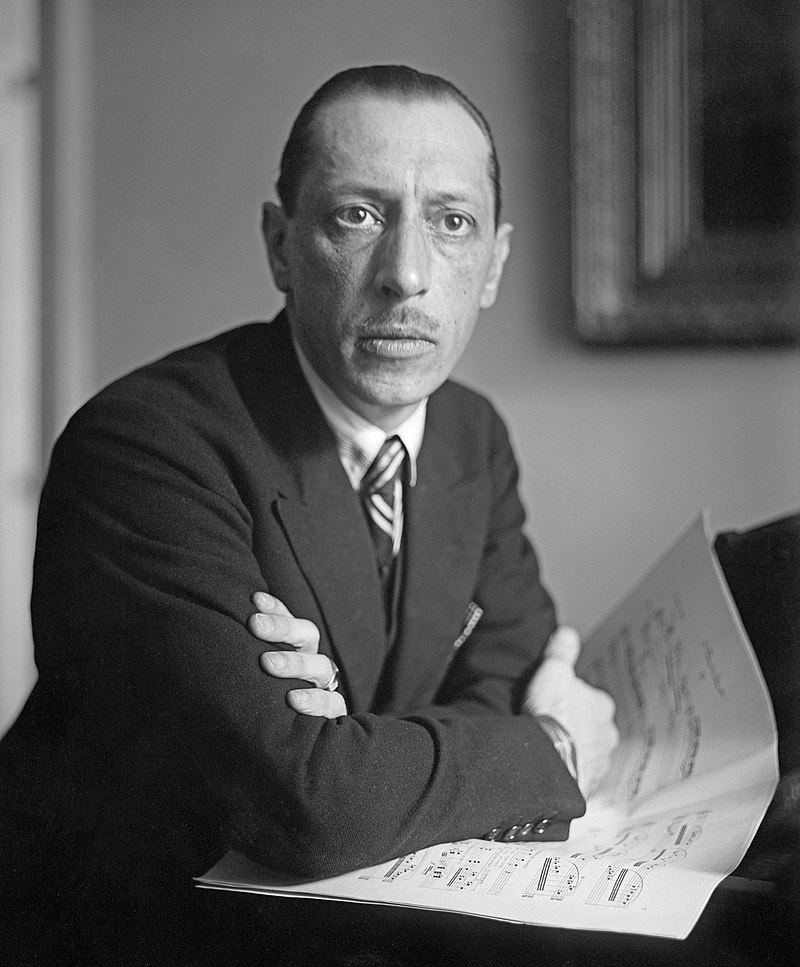
 composers of all-time and his music is still widely played the world over. Every year at Christmas time The Nutcracker fills our hearts with Christmas spirit, Swan Lake is a staple in the repertoire of all major ballet companies, Sleeping Beauty was adapted by Disney to bring to life the story of Princess Aurora, and military bands often give spectacular performances of his 1812 Overture. Tchaikovsky’s music is instantly recognizable and cherished over 100 years after his death!
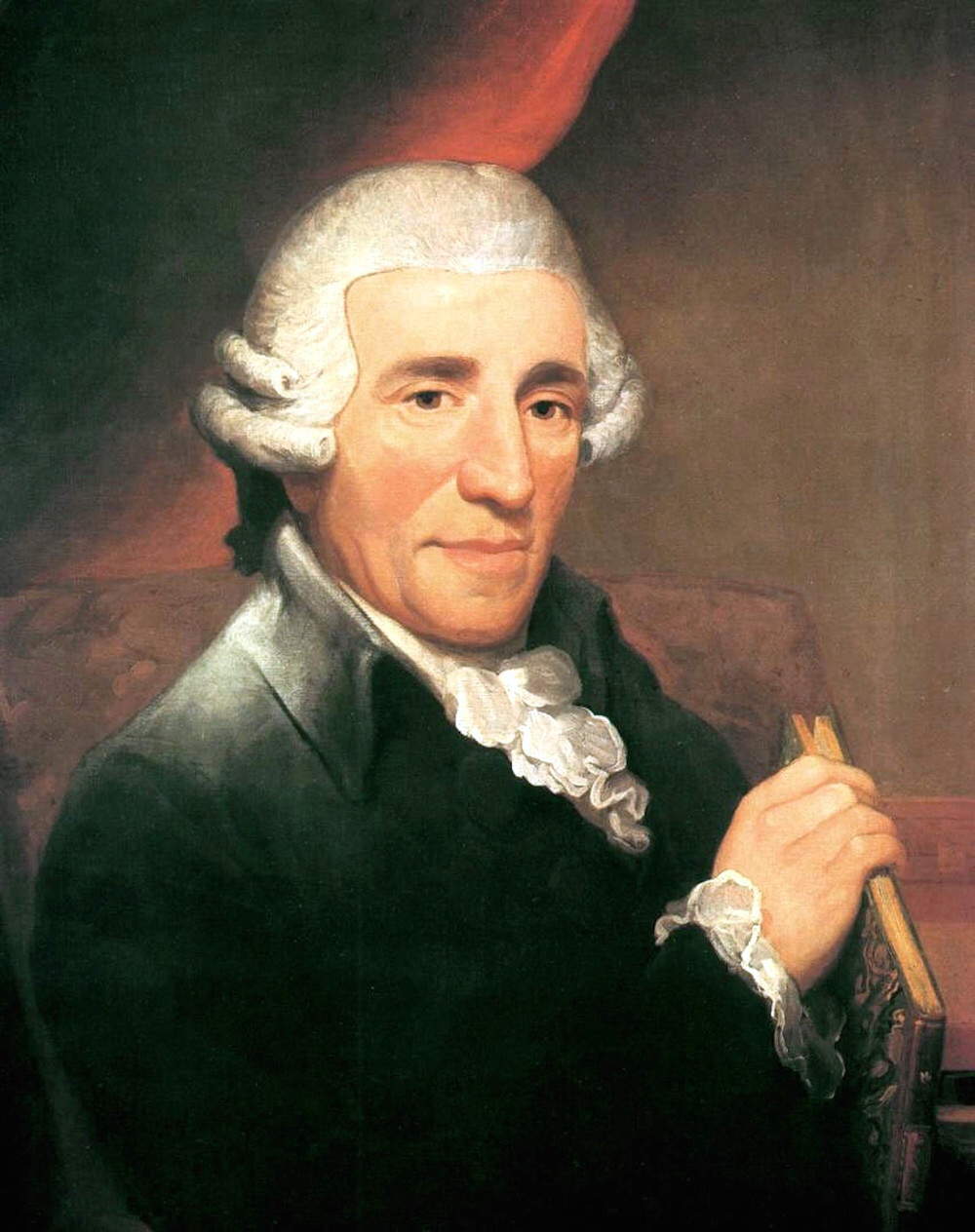 This month we will be talking about Austrian composer Franz Joseph Haydn. He was one of the most revered and important composers of the Classical Period. Haydn’s court musicians and Mozart himself affectionately called him Papa Haydn because of his good-nature, sense of humor, generosity, and kindness. He is also nicknamed the Father of the Symphony and the Father of the String Quartet for his advancement of these musical genres.
 This month we are learning about the godfather of classical music, Johann Sebastian Bach (or as one of his sons, C.P.E. Bach, very lovingly referred to him, “the old wig”). Bach’s music is admired and loved for its beauty, spirituality, drama, and consoling and reassuring nature. As soprano Nancy Argenta has said, “When you’re feeling frazzled, you need Bach not Beethoven to relax you. He has a calmness that makes people feel that all’s well with the world and that they’ll be all right.”
 This month we are learning about American composer Scott Joplin and ragtime music, the first American style of music. During our lesson time we will be talking a little about Scott Joplin’s life and the time of great changes in America during which he lived. I will be asking all my students to complete two homework assignments:
 soliviapiano.com